
What counts as a beat (literally)? What's the difference between tempo and time signature? What even is a meter? What’s the difference between 6/8 and 3/4? Here are the rhythm basics you need to know.
The ruler analogy
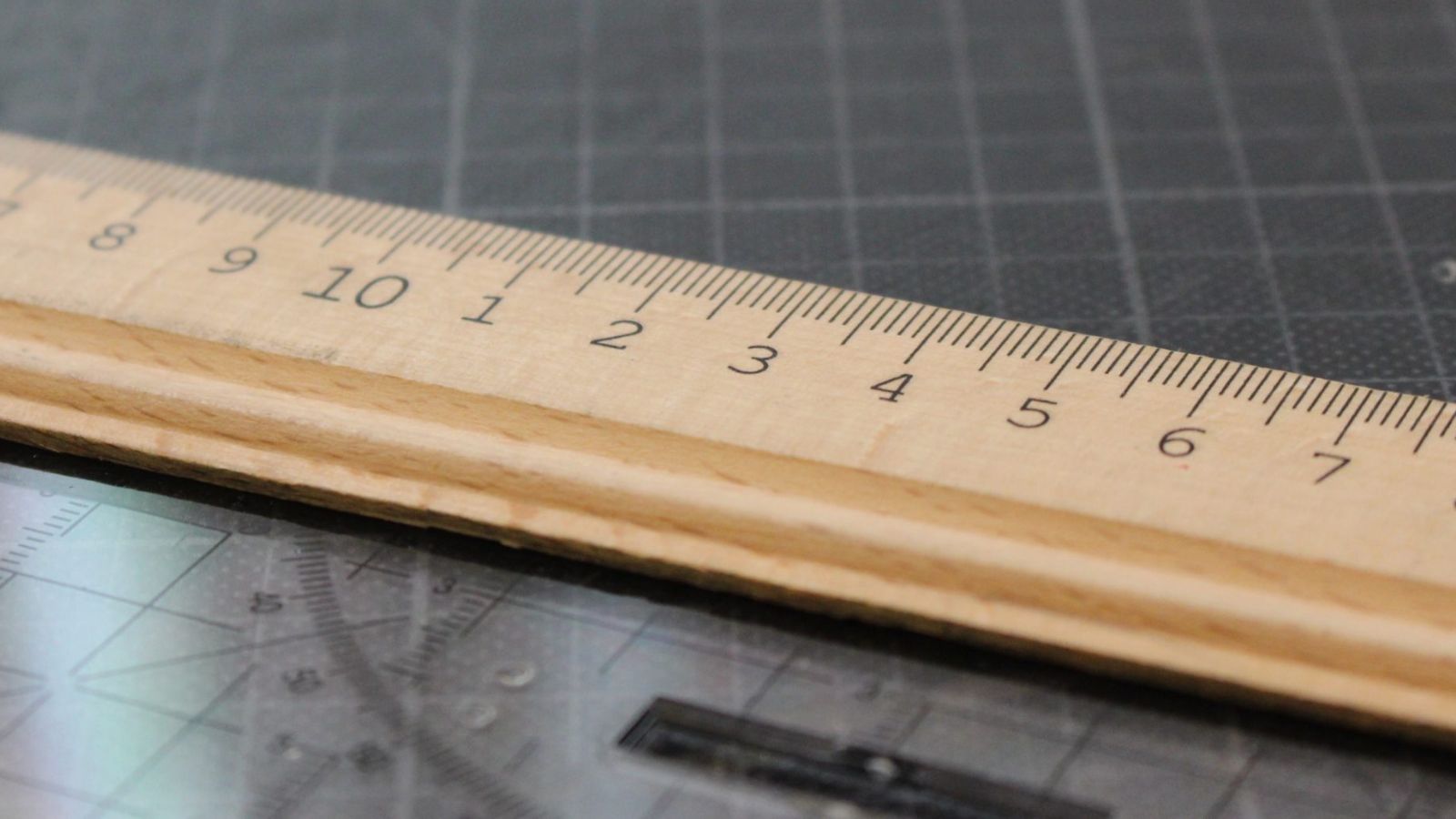
If you could map out a piece of music onto a ruler of time, the beats would be the units of measurement on the ruler, forming the foundation of rhythm basics.
Music consists of notes of different lengths, which is how we create rhythm. We measure the length of notes in beats.
We have different symbols and names for these various lengths of notes:

(There are two measures here. The line that separates each measure is a barline.)
Understanding measures
Think of a measure as a container of a fixed number of beats. You might have heard bands starting a song with the drummer shouting, '1, 2, 3, 4!' This is because their container has 4 beats, and the drummer counting in gives the band one whole measure to prepare. If you’re learning to read music, this is what measures look like:

(There are two measures here. The line that separates each measure is a barline.)
Time signatures explained
To illustrate further, going back to the ruler analogy, it’s similar to how one foot has a fixed amount of twelve inches, or how one centimeter has a fixed amount of ten millimeters. In music, this fixed amount of beats is changeable and is determined by the time signature. You’ll spot the time signature at the beginning of the music; it consists of two numbers stacked vertically.
The top number tells you how many beats there are in one measure.
The bottom number tells you what kind of note is considered one beat.

In the first example, the bottom number is 2, meaning one-half note is considered one beat. Additionally, the top number is 3, indicating that one measure has three half-note beats. Each time signature can be classified as a certain meter.
A meter is a specific pattern of strong and weak pulses, or the rhythmic feel of the music. There are two types of meter: simple and compound. In a simple meter, the beat is divided into two notes; in a compound meter, the beat is divided into three.
They'll feel like this:
- Simple Duple: ONE and TWO and (2/2, 2/4, 2/8, etc.)
- Simple Triple: ONE and TWO and THREE and (3/2, 3/4, 3/8, etc.)
- Simple Quadruple: ONE and TWO and THREE and FOUR and (4/2, 4/4, 4/8, etc.)
- Compound Duple: ONE and a TWO and a (6/8), or ONE two three FOUR five six (6/4)
- Compound Triple: ONE and a TWO and a THREE and a (9/8, etc.)
- Compound Quadruple: ONE and a TWO and a THREE and a FOUR and a (12/8, etc.)

Exploring complex meters
(6/8 and 3/4 both have 6-eighth notes in a measure, and they have distinctly different feels.)
As you delve into rhythm basics, meters can become quite complex. You can have a compound quintuple meter (15/8) or even a mixed meter where the meter changes every measure.

(Royal March from Igor Stravinsky's The Soldier's Tale (excerpt, piano reduction). Check out the mixed meter - this is often an essential audition piece for conductors!)
The importance of tempo
Tempo is the speed of the music. Keeping a steady tempo is a hallmark of good rhythm and timing. Tempo is typically expressed by either tempo markings—in words—or beats per minute (BPM)—in numbers. For instance, you might see something like this:

Allegro means fast or lively in Italian, and what's inside the brackets means a quarter note beat is played at 144 BPM. This is when you'll grab your metronome, set it to 144 BPM, and find your tempo!
And there you have it—your rhythm basics! Don't forget to check out more of our tips on rhythm basics, practice, and other musician-related topics!
How to find your BPM without a metronome
Don't have a metronome yet?
About Soundbrenner
We're on a mission to make music practice addictive. Our products are the ultimate companion for every practice session. And they're made for you. We serve all musicians, across all instruments and from beginners to professionals. Click here to learn more.
Do you have a question about Soundbrenner or our products? Contact us, we'd love to hear from you!
Read this next


